
Accounting Standards in Switzerland—What Foreign Companies Must Know
- Dec 19, 2025
- 7 min read
Updated: Jan 12

Most American business owners are surprised to learn that Switzerland uses its own distinct set of financial rules. With over 33% of Swiss listed companies choosing Swiss GAAP FER instead of global standards like IFRS, understanding these accounting principles is crucial for anyone involved in international business or investing. This article unpacks the Swiss approach, highlights what sets it apart, and explains why knowing the difference can make or break cross-border financial decisions.
Table of Contents
Key Takeaways
Point | Details |
Understanding Swiss GAAP FER | Swiss GAAP FER provides a flexible accounting framework tailored for small and medium-sized enterprises in Switzerland, prioritizing transparency and simplicity. |
Framework Selection | Companies in Switzerland can choose between IFRS, Swiss GAAP FER, and US GAAP based on their specific needs, with each framework catering to different business types and market dynamics. |
Legal Compliance | Swiss corporate law mandates detailed financial documentation and annual financial statement preparation for companies, ensuring compliance with selected accounting standards. |
Risks for Foreign Owners | Foreign owners must navigate unique regulatory challenges and compliance risks, highlighting the importance of engaging local accounting experts for effective financial management. |
Defining Swiss Accounting Standards and Core Principles
Switzerland has developed a sophisticated accounting framework known as Swiss GAAP FER (Financial Reporting Standards) that provides comprehensive guidelines for financial reporting across different business entities. Swiss accounting standards are designed to deliver a true and fair representation of an organization’s financial position, ensuring transparency and reliability for investors and stakeholders.
The Swiss GAAP FER standards are strategically tailored for small and medium-sized enterprises, offering a more flexible approach compared to international frameworks like IFRS. These standards focus on providing meaningful financial information while maintaining a lower regulatory density. Accounting regulations in Switzerland prioritize conveying an accurate snapshot of assets, financial performance, and overall business situation without overwhelming companies with complex reporting requirements.
Key characteristics of Swiss accounting standards include:
Emphasis on transparency and accurate financial representation
Adaptability for different company sizes and structures
Simplified reporting processes compared to international standards
Focus on providing actionable financial insights
Pro Tip: Accounting Strategy Preparation: When establishing a Swiss company, consult with local accounting professionals who specialize in Swiss GAAP FER to ensure your financial reporting meets all national standards and provides maximum clarity for potential investors.
Major Financial Reporting Frameworks in Switzerland
Switzerland offers multiple financial reporting frameworks that provide flexibility for businesses operating within its financial ecosystem. International financial reporting standards in Switzerland demonstrate a sophisticated approach to accounting, with companies having the option to choose between IFRS, Swiss GAAP FER, and US GAAP depending on their specific organizational needs and market positioning.
The current landscape of financial reporting reveals interesting adoption patterns across Swiss publicly listed companies. As of recent data, approximately 56% of companies listed on the SIX Swiss Exchange utilize IFRS Standards, while 33% rely on Swiss GAAP FER, and a smaller percentage use US GAAP. Each framework offers unique advantages tailored to different business requirements, with IFRS being particularly suited for public entities and international financial markets.
Key characteristics of the primary financial reporting frameworks include:
IFRS (International Financial Reporting Standards)
Principle-oriented and detailed approach
Worldwide acceptance
Targeting public entities and international markets
Swiss GAAP FER
Principle-oriented and concise framework
Tailored for small and medium-sized Swiss entities
Recognized within Switzerland
US GAAP
Comprehensive accounting standards
Primarily used by US-based multinational corporations
Detailed regulatory requirements
Pro Tip: Framework Selection Strategy: Carefully evaluate your company’s specific reporting needs, market positioning, and long-term financial goals before selecting a financial reporting framework to ensure maximum compliance and transparency.
Here’s a concise comparison highlighting the business relevance of Switzerland’s main financial reporting frameworks:
Framework | Best Fit Business Type | Investor Appeal |
IFRS | Multinational, public companies | High for global investors |
Swiss GAAP FER | Swiss SMEs and local firms | Strong for domestic investors |
US GAAP | US multinationals in Switzerland | Relevant for US stakeholders |
Legal Requirements for Swiss-Registered Companies
Swiss corporate law establishes comprehensive legal requirements for companies registered within its jurisdiction, designed to ensure financial transparency and operational integrity. Financial reporting standards in Switzerland promote comparability of financial statements and align informational content with rigorous international accounting principles, emphasizing the presentation of a true and fair view of a company’s financial position.

The federal accounting model provides a structured framework for financial reporting, drawing from private sector best practices. Companies must prepare detailed financial documentation including a statement of financial performance, statement of financial position, and comprehensive cash flow statement. Swiss federal accounting guidelines are particularly notable for their alignment with International Public Sector Accounting Standards (IPSAS), which guarantees transparency and realistic representation of financial situations.
Key legal requirements for Swiss-registered companies include:
Mandatory annual financial statement preparation
Compliance with chosen accounting framework (IFRS, Swiss GAAP FER, or US GAAP)
Detailed record-keeping and financial documentation
Regular external auditing for certain company types
Submission of annual reports to appropriate regulatory bodies
Maintenance of registered business address in Switzerland
Appointment of qualified directors and statutory representatives
Pro Tip: Documentation Preparation Strategy: Engage a local Swiss accounting professional to ensure your company’s financial reporting meets all legal requirements and follows the most appropriate accounting framework for your specific business structure.
Swiss GAAP vs. International Standards—Key Differences
Navigating the nuanced landscape of accounting standards requires a deep understanding of the unique characteristics distinguishing Swiss GAAP from international frameworks like IFRS and US GAAP. Swiss accounting requirements represent a distinctive approach that balances comprehensive financial reporting with pragmatic, business-friendly principles, tailored specifically to the Swiss economic environment.
The primary differentiators between Swiss GAAP and international standards lie in their philosophical approach and regulatory complexity. While IFRS emphasizes extensive disclosure and complex valuation methodologies, Swiss GAAP focuses on providing a clear, concise representation of financial performance. This approach prioritizes substance over intricate procedural requirements, making it particularly attractive for small and medium-sized enterprises seeking straightforward financial reporting mechanisms.
Key comparative elements between Swiss GAAP and international standards include:
Regulatory Complexity
Swiss GAAP: Simplified, principle-based approach
IFRS: Highly detailed, comprehensive rules
US GAAP: Extensive, prescriptive regulatory framework
Reporting Flexibility
Swiss GAAP: Adaptable to local business practices
IFRS: Standardized global reporting model
US GAAP: Rigid, specific compliance requirements
Valuation Methods
Swiss GAAP: Conservative, pragmatic valuation
IFRS: Fair value-oriented approach
US GAAP: Specific industry-based valuation rules
Pro Tip: Standard Selection Strategy: Carefully assess your company’s specific operational needs, target markets, and long-term reporting objectives before selecting an accounting framework to ensure optimal financial transparency and regulatory compliance.
Obligations, Compliance, and Risks for Foreign Owners
Foreign business owners operating in Switzerland must navigate a complex landscape of regulatory requirements and financial reporting obligations. International accounting standards in Switzerland present unique challenges, with multiple reporting frameworks offering different levels of complexity and investor transparency.
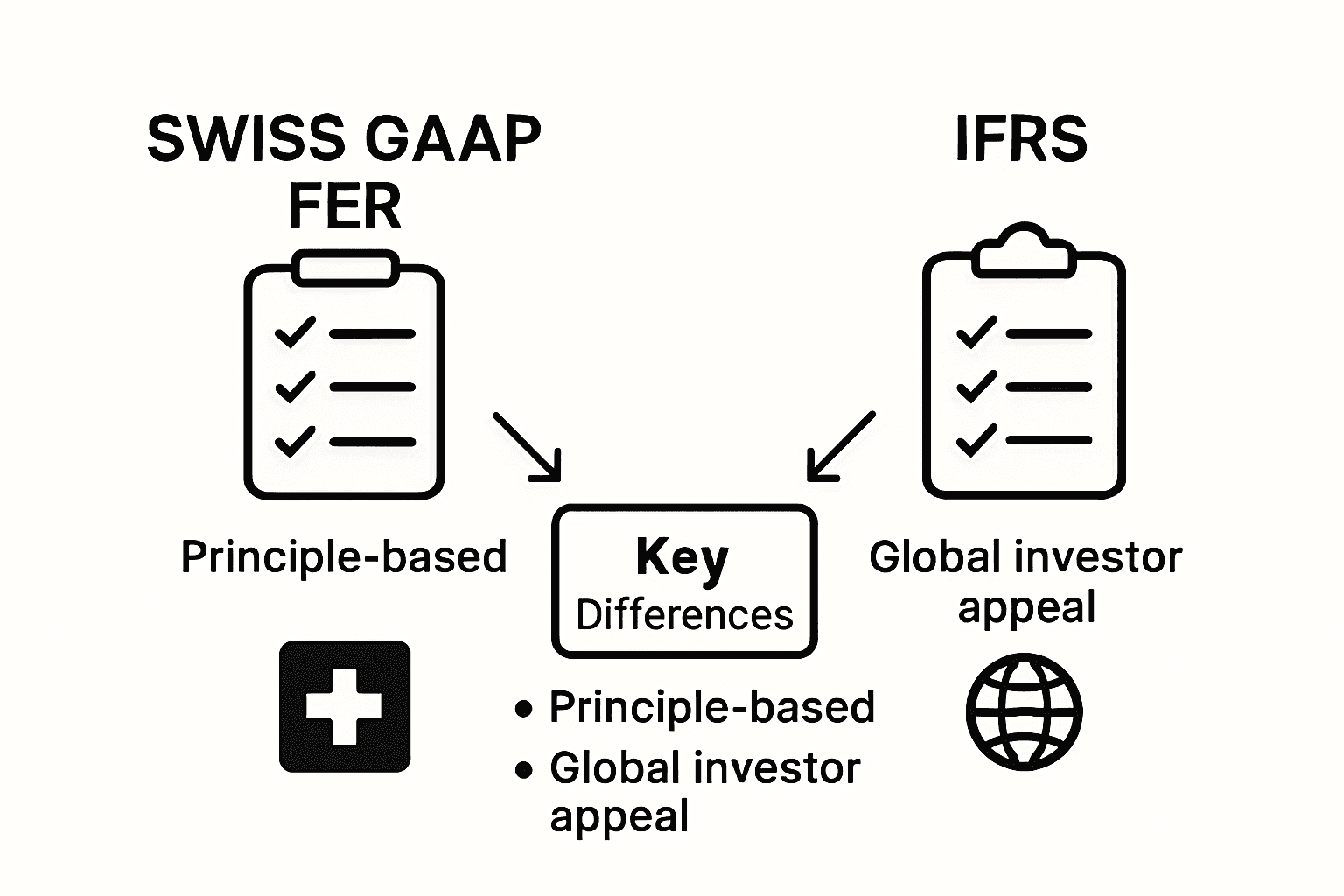
Companies must carefully evaluate their reporting strategy, considering the potential implications of their chosen accounting framework. The primary options include IFRS, Swiss GAAP FER, and US GAAP, each carrying distinct reporting requirements and potential risks for foreign ownership. While IFRS offers familiarity to international investors, Swiss GAAP FER provides a more localized approach that may require additional explanation to global stakeholders.
Key compliance obligations for foreign owners include:
Maintaining accurate and transparent financial documentation
Adhering to Swiss regulatory reporting standards
Understanding local accounting framework nuances
Implementing robust internal financial control mechanisms
Preparing for potential regulatory audits
Ensuring complete disclosure of financial performance
Managing potential cross-border reporting complexities
Potential Risks for Foreign Owners:
Misalignment with local accounting practices
Increased administrative burden
Potential financial reporting misunderstandings
Compliance penalties for improper reporting
Higher accounting and legal consultation costs
Challenges in investor communication
Pro Tip: Risk Mitigation Strategy: Engage local Swiss accounting experts who can provide comprehensive guidance on navigating the intricate landscape of financial reporting and ensure your company remains fully compliant with national regulatory standards.
To assist foreign owners, here is a summary of core financial compliance risks and recommended mitigation tactics:
Risk Area | Example Challenge | Mitigation Strategy |
Local Practice Alignment | Unfamiliarity with Swiss GAAP | Hire local accounting experts |
Reporting Complexity | Navigating multiple frameworks | Choose most aligned framework |
Cross-Border Disclosures | Conflicting regulatory demands | Centralize compliance oversight |
Simplify Swiss Accounting Compliance with Expert Support
Foreign companies face complex challenges when navigating Swiss accounting standards such as Swiss GAAP FER, IFRS, and US GAAP. These frameworks require precise financial documentation, regulatory compliance, and clear communication with investors and authorities. The pressure to align with local practices while managing legal obligations can create uncertainty and increase administrative burdens for international entrepreneurs.
At RPCS, we understand these critical pain points. Our comprehensive services help you manage accounting compliance, legal documentation, and financial reporting seamlessly within Switzerland’s regulatory environment. Whether you are setting up a GmbH or AG, our experts specialize in Swiss accounting frameworks and can guide you step-by-step to ensure full adherence to national standards, minimize risks, and provide clarity to your investors.

Take control of your Swiss company formation and ongoing financial compliance today. Visit RPCS to access tailored solutions designed for foreign business owners who want straightforward, reliable, and professionally managed accounting and legal services. Don’t let complex Swiss accounting standards hold you back. Start your journey with us now to build a stable and compliant presence in Switzerland.
Frequently Asked Questions
What are the key accounting standards in Switzerland for foreign companies?
In Switzerland, foreign companies can choose between International Financial Reporting Standards (IFRS), Swiss GAAP FER, and US GAAP depending on their operational needs and regulatory compliance requirements.
How does Swiss GAAP FER differ from IFRS?
Swiss GAAP FER offers a simplified, principle-based approach tailored for small and medium-sized enterprises, while IFRS follows a detailed, comprehensive rules-based structure aimed at public entities and international markets.
What legal requirements must foreign companies meet for financial reporting in Switzerland?
Foreign companies must prepare annual financial statements, maintain accurate documentation, comply with the selected accounting framework, and submit reports to relevant regulatory bodies to ensure transparency and legal compliance.
What risks do foreign owners face regarding compliance with Swiss accounting standards?
Foreign owners may encounter risks such as misalignment with local accounting practices, increased administrative burdens, compliance penalties for improper reporting, and challenges in effectively communicating financial performance to stakeholders.
Recommended
Comments